Exploring these streets naturally leads to some of Palma’s best restaurants and wine bars, many hidden in historic buildings and courtyards in the Old Town. After wandering, it’s easy to stop for a relaxed meal or a glass of wine nearby.
Palma Cathedral & Old Town
Palma Cathedral & Old Town: opening hours, ticket prices, best photo spots, and how to skip the crowds.
Palma’s Historic Old Town is the cultural and architectural heart of Palma de Mallorca, where centuries of history unfold between Gothic landmarks, royal palaces, and atmospheric medieval streets. Dominated by the iconic La Seu Cathedral and surrounded by some of the city’s most important monuments, this area offers one of the most rewarding sightseeing experiences in Mallorca. From grand viewpoints overlooking the Mediterranean to hidden courtyards, lively squares, and elegant historic buildings, the Old Town combines history, culture, and authentic local life in one unforgettable setting.
La Seu Cathedral — The Icon of the City
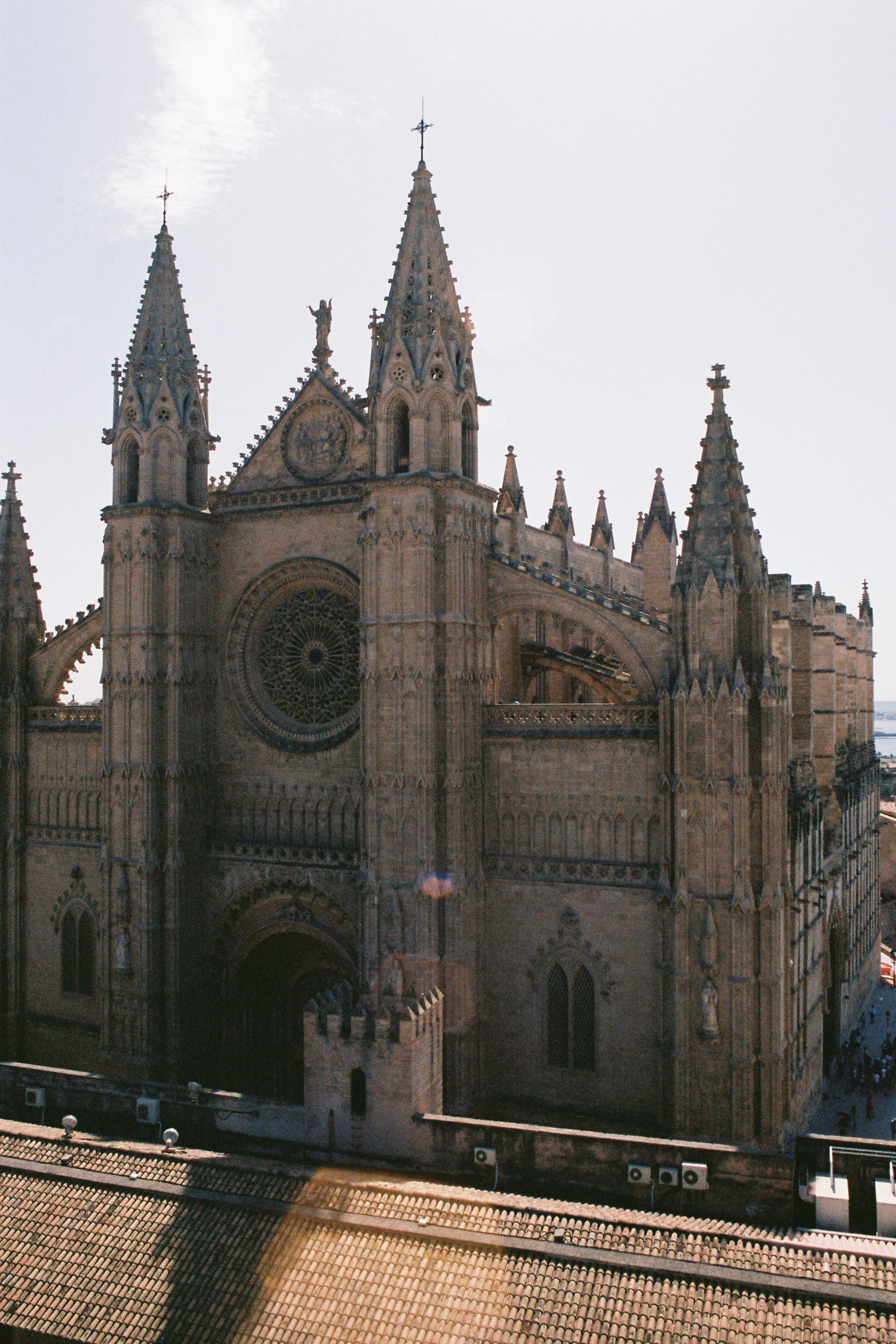
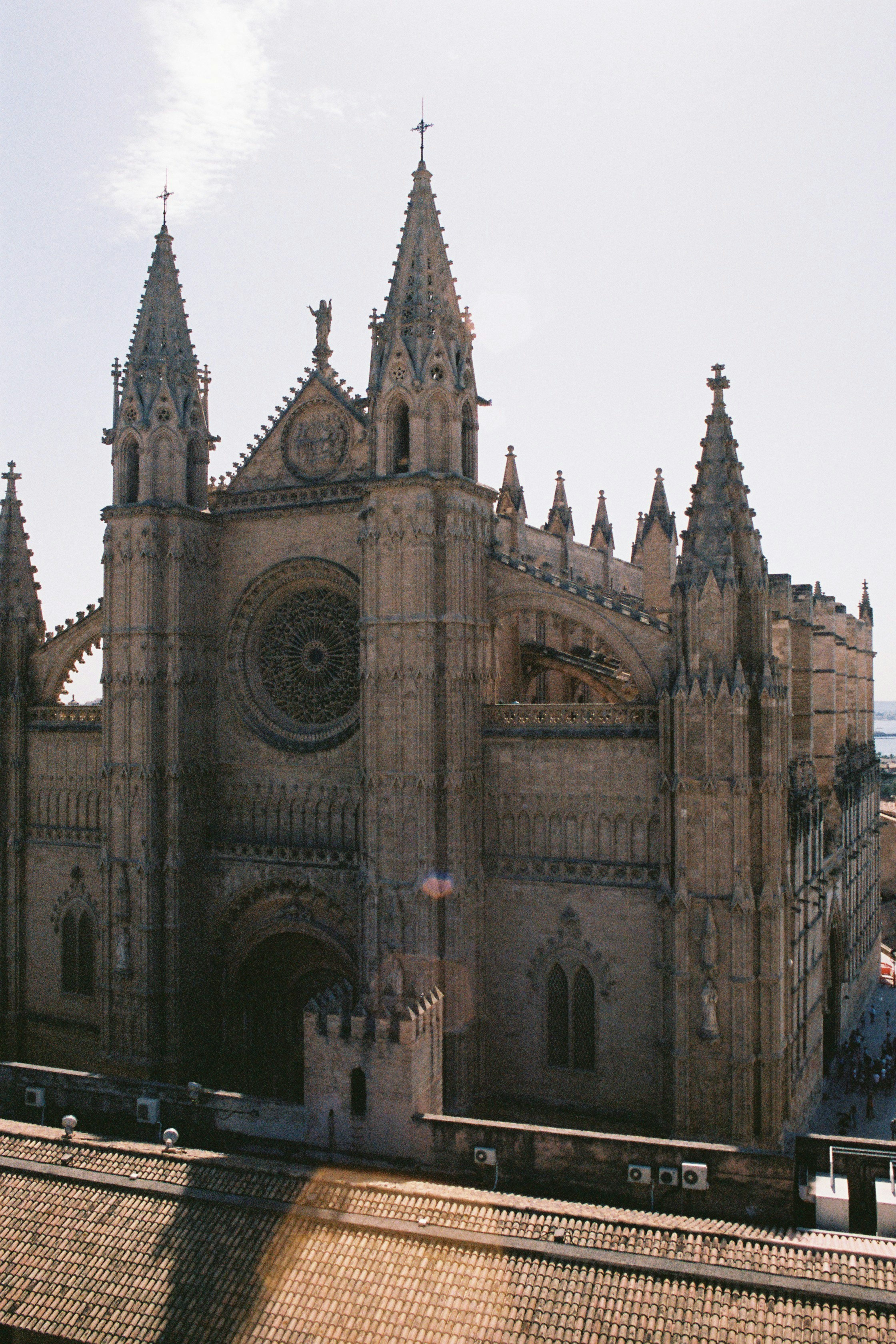
La Seu Cathedral is the most famous landmark and architectural masterpiece of Mallorca. Rising dramatically above the sea, this magnificent Gothic cathedral dominates the skyline and represents the historic and spiritual heart of the city.
Construction began in the 13th century on the site of a former mosque and continued for several hundred years, resulting in one of the tallest Gothic cathedrals in Europe. Its golden sandstone façade glows beautifully in the Mediterranean sunlight, especially at sunrise and sunset.
Highlights:
- one of Europe’s most impressive Gothic cathedrals
- giant Gothic rose window
- stunning interior redesigned partly by Antoni Gaudí
- unique location overlooking the sea
- symbol of Mallorca’s history and culture
The Royal Palace of La Almudaina
Just beside the cathedral, this former Moorish fortress turned royal residence offers a quiet, cool escape. Marble courtyards, tapestries, and sea-facing balconies tell stories of centuries of power and beauty.
Ajuntament de Palma & Plaça Cort
Home to the city hall and an ancient olive tree over 800 years old. Grab a cortado at Café Riutort or La Corte, and watch local life unfold around you.
Bellver Castle
Bellver Castle is a unique circular fortress set on a hill above the city, offering spectacular panoramic views of Palma and the bay. Built in the 14th century as a royal residence, it later served as a prison and today stands as one of the island’s most impressive historic landmarks.
Lonja de Palma
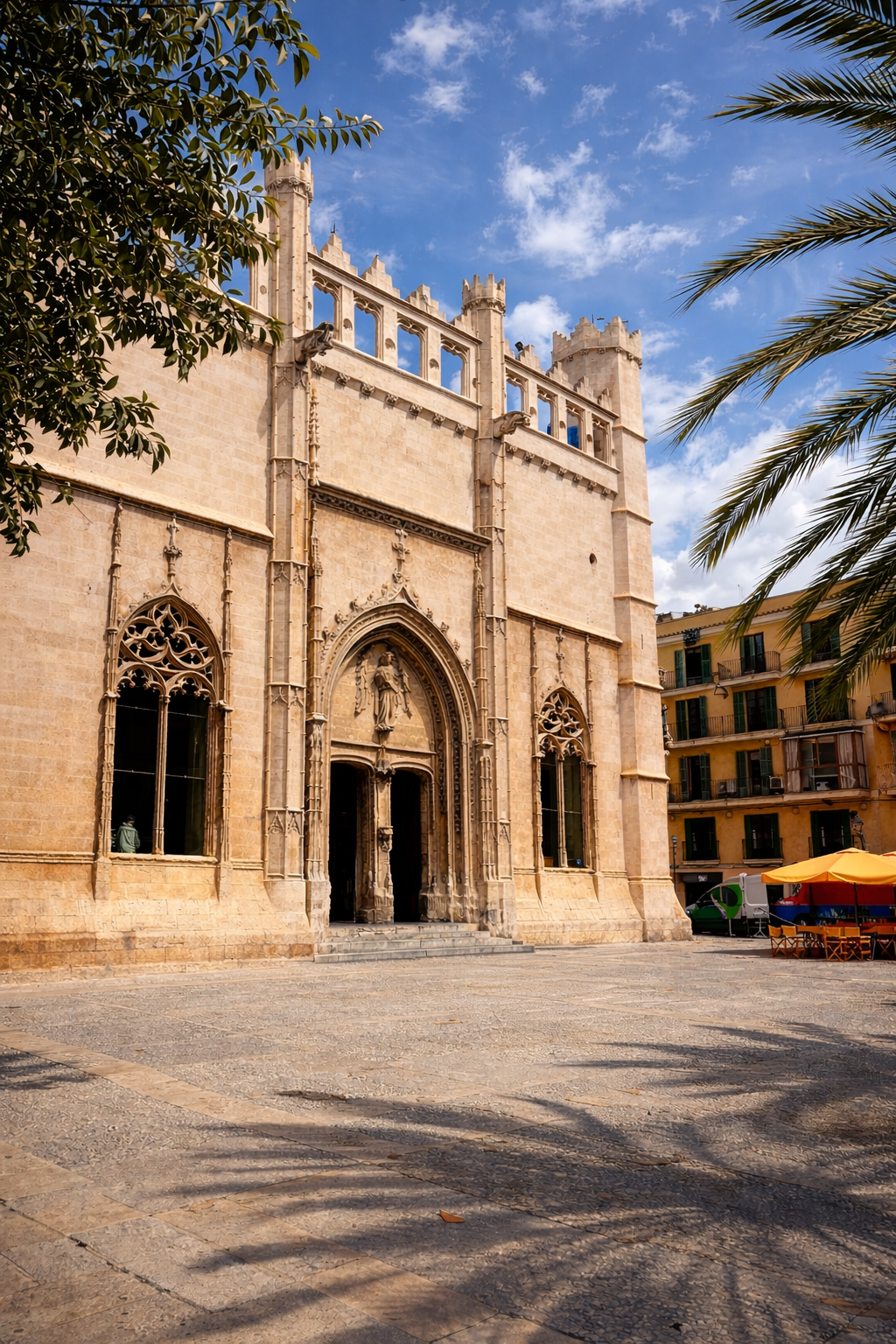
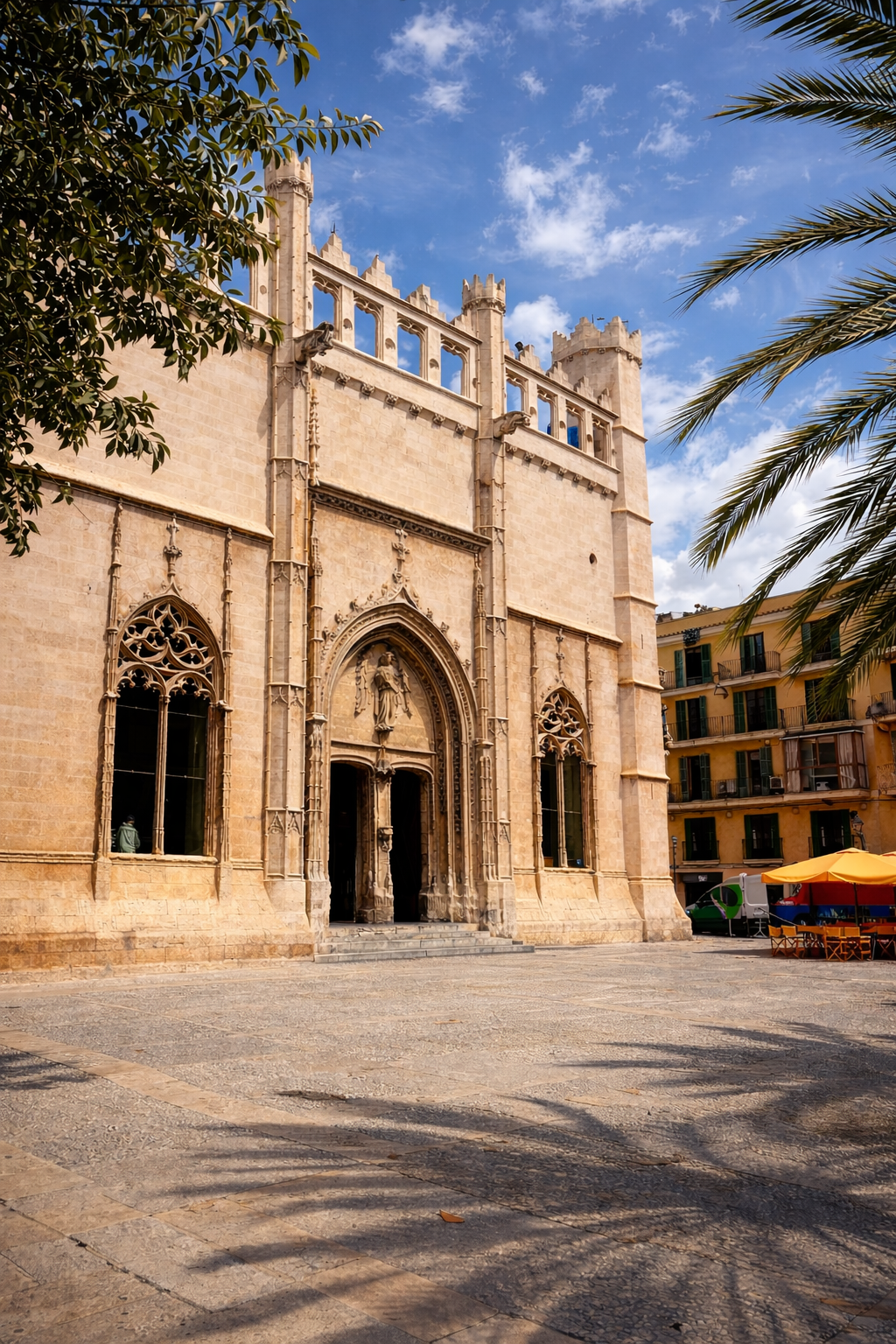
La Lonja de Palma, also known as La Llotja, is one of the most beautiful Gothic buildings in Mallorca and a must-see landmark in Palma’s historic center. Built in the 15th century as a merchants’ exchange, it reflects the island’s golden age as a powerful Mediterranean trading hub.
Designed by renowned Mallorcan architect Guillem Sagrera, the building stands as a masterpiece of Mediterranean Gothic architecture, featuring elegant towers, intricate stone carvings, and a striking fortress-like appearance.
Why Visit La Lonja:
- one of the most important buildings in Palma
- impressive Gothic architecture and detailed façade
- quiet cultural site compared to the busy cathedral
- perfect photo spot in the Old Town
- located in one of the liveliest areas for nightlife
Charming Streets of the Old Town
Beyond Palma’s most famous landmarks, the real charm of the historic center reveals itself in its maze of narrow streets and quiet courtyards. Walking through the Old Town, you’ll quickly notice how each small alley seems to lead to another hidden square, historic building, or shaded passageway. Many of these streets date back to the medieval period and still preserve architectural details from centuries of Palma’s history.
As you wander through the district, look for the elegant Mallorcan patios hidden behind large wooden doors. These interior courtyards were traditionally built inside noble townhouses and often feature stone staircases, columns, and small gardens. Some are visible from the street if the doors are open, offering a glimpse into Palma’s aristocratic past.
The Old Town is also filled with small independent boutiques, artisan shops, and art galleries tucked between historic buildings. Streets such as Carrer de Sant Feliu, Carrer de la Missió, and Carrer de Can Verí are particularly atmospheric and often less crowded than the main tourist routes. Here you can discover antique shops, local design stores, and quiet cafés that feel worlds away from the busy plazas.
In the end, the best way to experience this part of the city is simply to let yourself be guided by the streets — with no map and no plan. Getting a little lost here isn’t a mistake; it’s part of the experience. Some of the most beautiful spots in Palma reveal themselves only to those who slow down and explore.