Discover the soul of Mallorca – from Sóller to Deià and Valldemossa.
Journey through the Tramuntana mountains, explore the “Golden Valley,” and visit some of the island’s most beautiful villages.
There are villages in Mallorca that feel built for photographs, and then there are places that feel lived in. Deià belongs to the second category. Perched on the steep slopes of the Serra de Tramuntana, between terraced olive groves and the Mediterranean, the village has attracted writers, musicians, painters and travelers looking for a slower rhythm for nearly a century.
Unlike the busier resort towns of the island, Deià doesn’t try to entertain you. There are no long beaches, no beach clubs with DJs, and very little nightlife. Instead, the appeal lies in the quiet streets, the smell of citrus trees and rosemary, and the feeling that you’ve discovered one of Mallorca’s most atmospheric places.
For travelers planning a trip to Mallorca — especially if you’re already exploring nearby villages like Valldemossa or Sóller — Deià makes a perfect half-day or overnight stop. The village is small, but its surroundings, restaurants and coastal walks offer more than enough reasons to linger. Below is a practical guide to help you plan a visit: what to see, where to eat, where to stay, and what experiences make this village special.
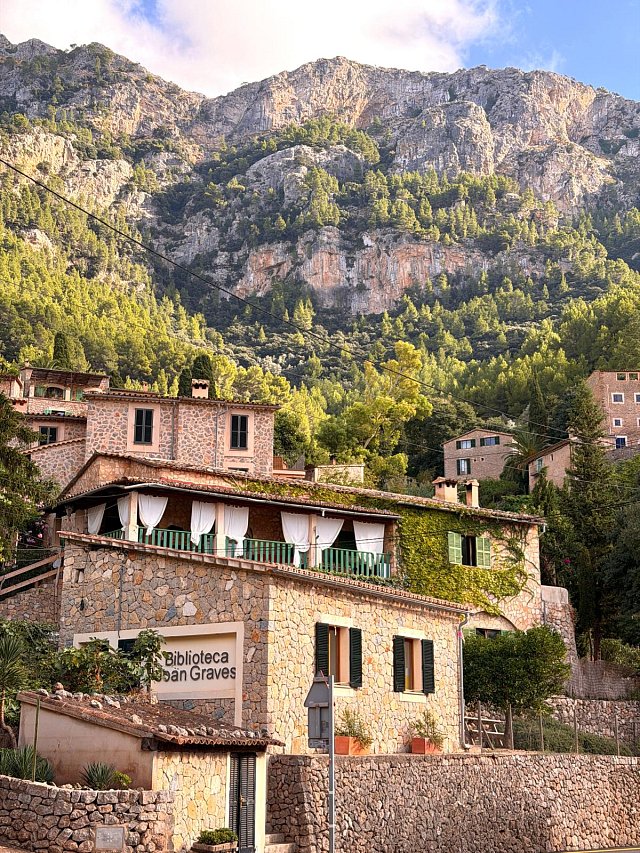
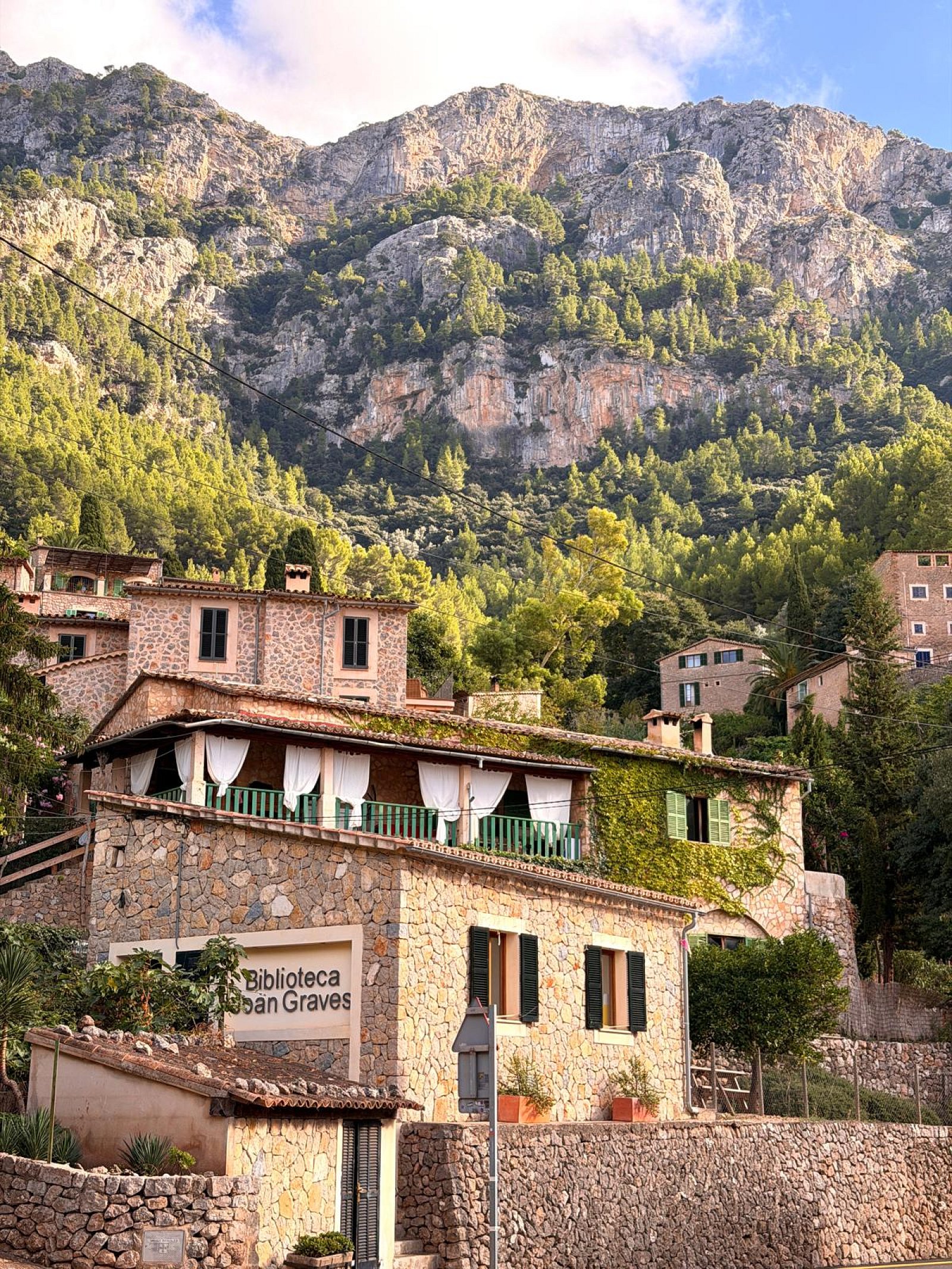
Deià’s reputation began in the early 20th century when the English writer Robert Graves settled here and made the village his home. Artists, musicians and writers followed, drawn by the dramatic scenery and peaceful atmosphere.
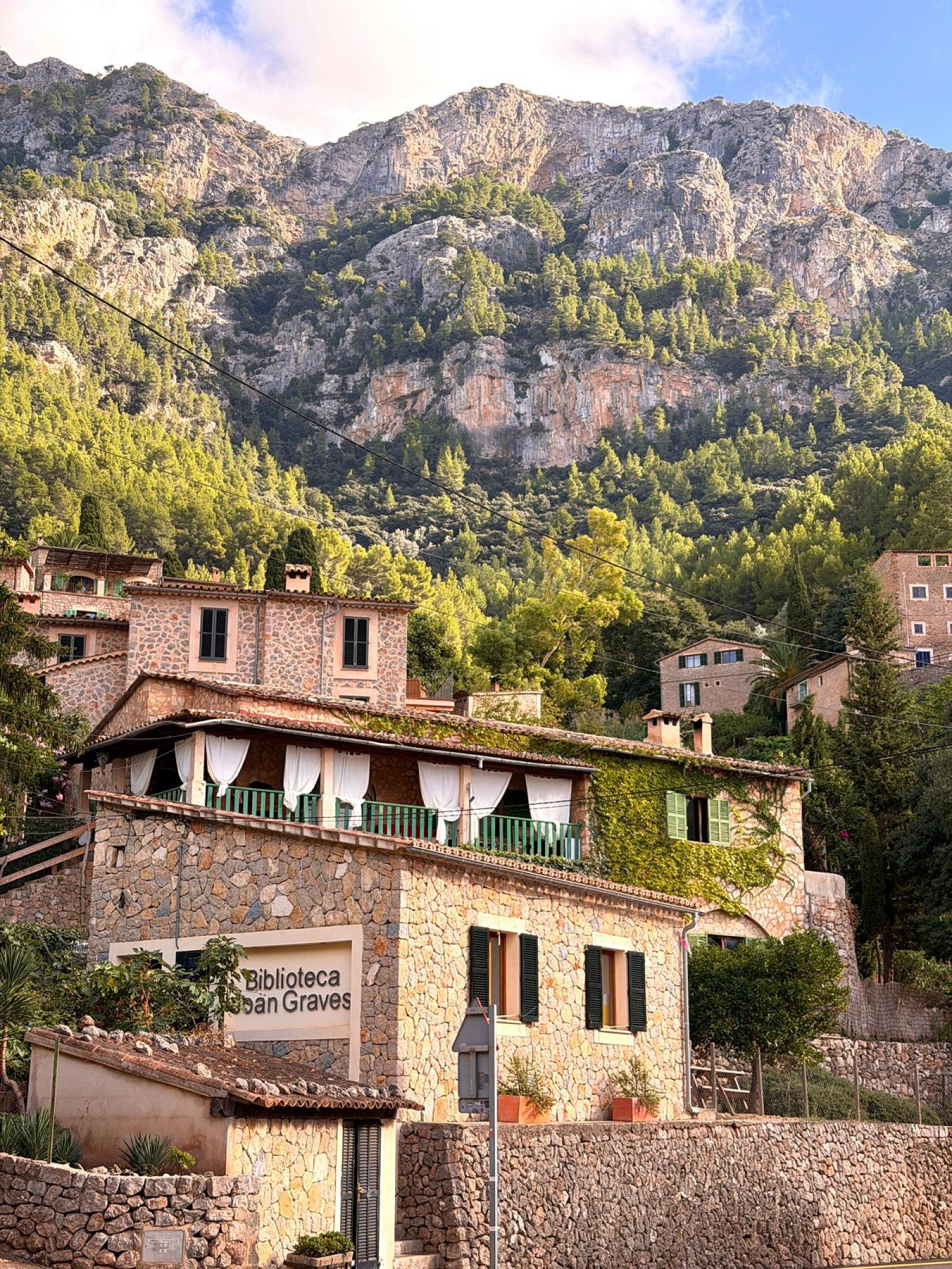
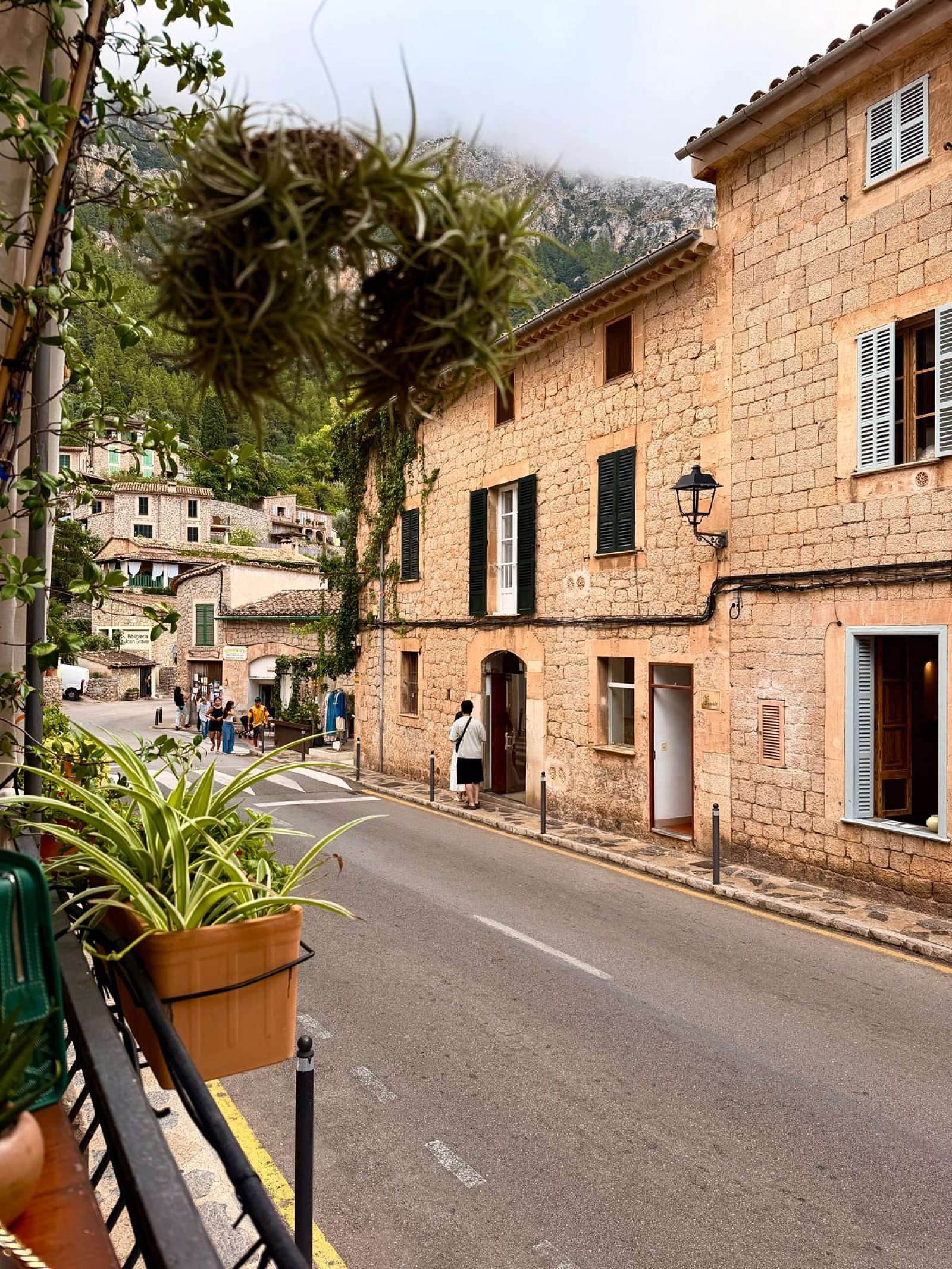
Today the village still carries that creative energy. Small galleries, studios and craft shops sit between traditional stone houses with green shutters and terracotta roofs. But the real reason people fall in love with Deià is its landscape.
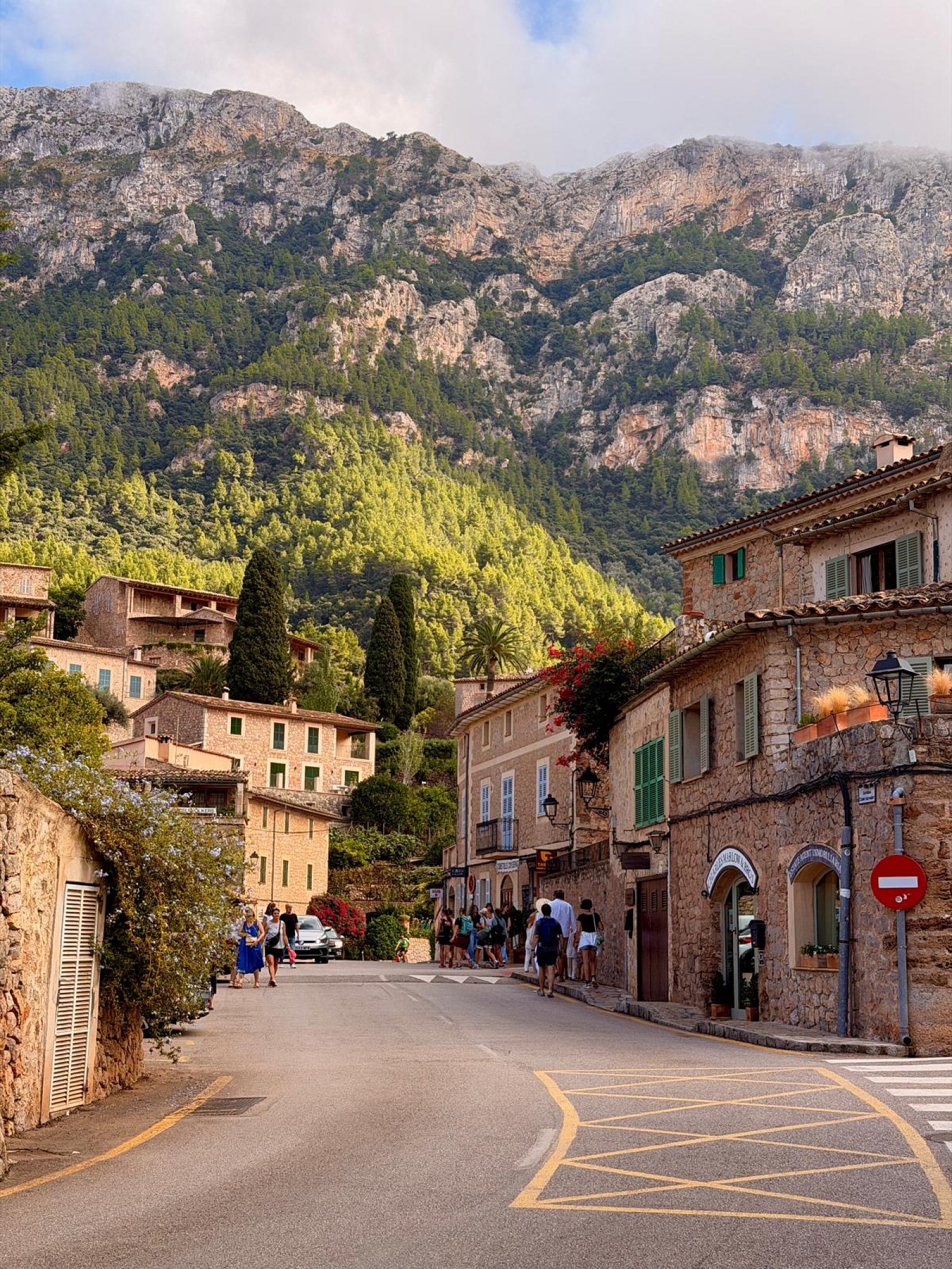
The village sits about 400 meters above sea level, facing a valley that descends toward the sea. Terraces filled with ancient olive trees surround the village, while narrow roads connect it to hidden coves and hiking trails.
This setting means that almost every corner offers a beautiful view — whether it’s the mountains behind you or the Mediterranean below.
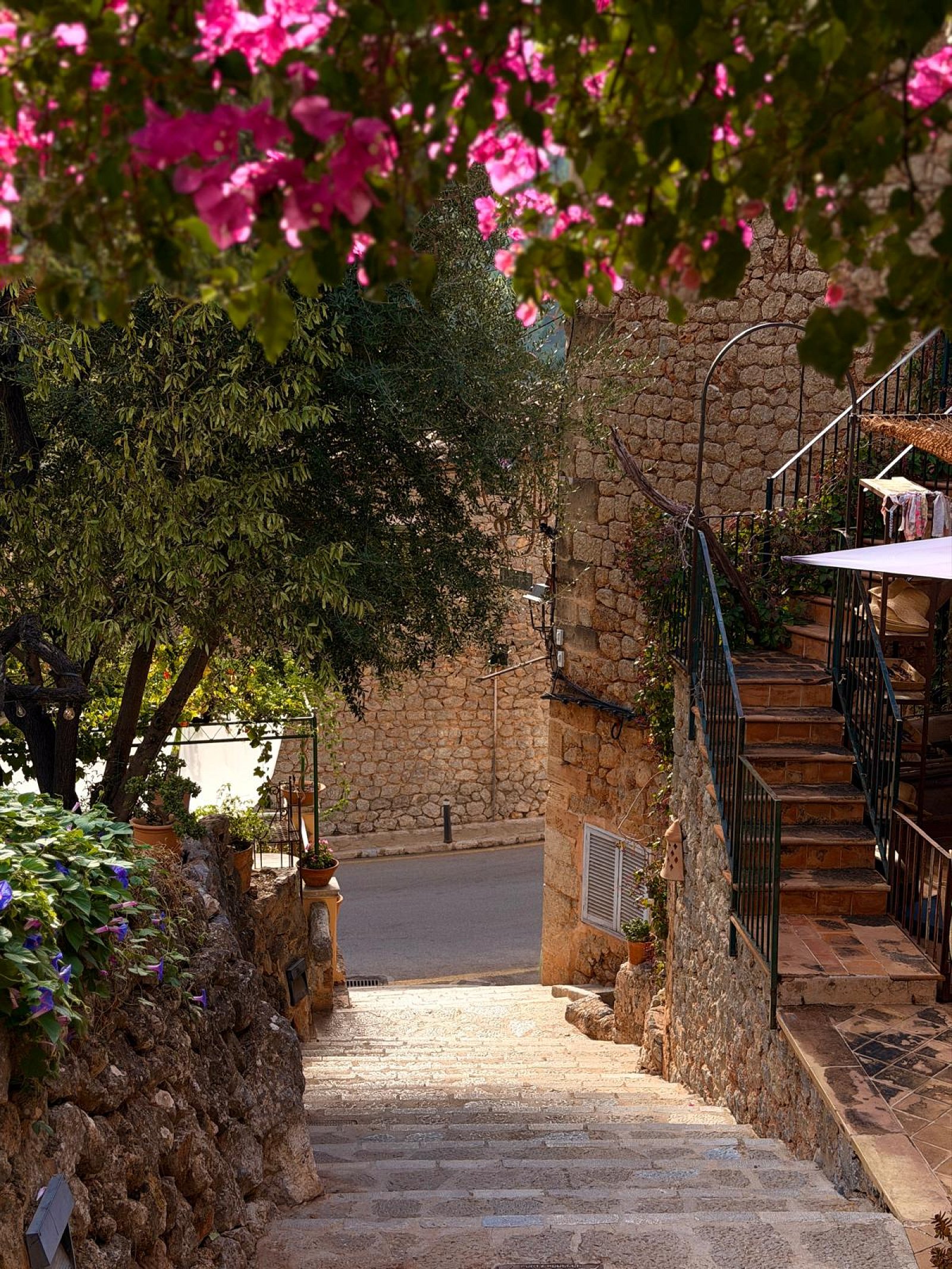
The best way to discover Deià is simply to wander. Start at the small central square, where cafés and restaurants overlook the valley. From here, follow the stone lanes that climb toward the church. The houses here are built from warm golden stone typical of the Tramuntana region with a small gardens filled with citrus trees.
Unlike many tourist villages, Deià still feels authentic. Residents sit on terraces in the evening, and artists display their work in small studios. If you enjoy photography, early morning or late afternoon light makes the village particularly beautiful.
At the top of the village sits Sant Joan Baptista Church (Deià), a simple stone church that dates back several centuries. From the terrace beside the church, you get one of the best views of the valley and the sea beyond. The perspective helps you understand just how dramatically the village sits within the mountains.
One of the most rewarding walks from the village leads down to Cala Deià, a small rocky cove about 30 minutes away on foot. The path winds through olive terraces and pine trees before descending to the water.
The cove itself is tiny and pebbly rather than sandy, but the water is beautifully clear and the surrounding cliffs create a dramatic setting. Swimming here feels more like discovering a hidden Mediterranean inlet than visiting a typical beach. Two small restaurants sit just above the cove, making it a great place to stop for lunch after the walk.
Literary travelers may want to visit Robert Graves House (Ca n'Alluny), where the British writer lived for many years. The house is now a small museum displaying photographs, manuscripts and personal belongings. It offers insight into the artistic community that once gathered here and explains how the village became an international cultural hub. Even if you’re not familiar with his work, the house and garden provide a quiet glimpse into Deià’s history.
Journey through the Tramuntana mountains, explore the “Golden Valley,” and visit some of the island’s most beautiful villages.
One of the most famous places to eat near the village is Ca's Patro March, perched above the rocky cove of Cala Deià. This rustic seafood restaurant serves simple dishes like grilled fish, prawns and local vegetables. The setting — wooden tables overlooking the sea — is what makes it unforgettable. Reservations are essential in summer.
Nama (Deià restaurant) offers a completely different experience: Asian-inspired cuisine with panoramic views over the valley. The terrace is particularly beautiful at sunset, when the mountains begin to glow in the warm evening light. Popular dishes include Thai curries, sushi and creative cocktails.
For something more relaxed, Sa Fonda (Deià) has long been a meeting place for artists and travelers. During the day it serves coffee and simple Mediterranean meals, while evenings often bring live music and a lively atmosphere.
Deià is not a place to rush through. It rewards slow travel: long lunches overlooking the valley, evening walks through quiet streets and morning swims in hidden coves.
The most famous hotel in the village is La Residencia, A Belmond Hotel, Mallorca. This luxury property consists of two restored manor houses surrounded by olive groves and gardens. The hotel includes art studios, sculpture gardens, tennis courts and beautiful swimming pools on the island. Even if you’re not staying overnight, visiting for dinner or a drink is worth considering.
Several smaller boutique guesthouses offer a more intimate experience. These accommodations often occupy traditional stone houses with terraces overlooking the valley. Because the village is small, most places are within walking distance of restaurants and hiking trails. Booking early is recommended, especially between May and October.
The Serra de Tramuntana mountains are a UNESCO World Heritage landscape known for their ancient terraces, dry-stone walls and dramatic scenery.
Popular hiking routes near the village include trails toward: Lluc Alcari, Sóller, the coastal viewpoints above Cala Deià. Spring and autumn are the best seasons for walking, when temperatures are cooler and the landscape is green.
The coastal road between Deià and Sóller is the most beautiful drives on the island. The road curves along cliffs above the sea and passes small villages and olive groves.
Several viewpoints along the route provide spectacular photo opportunities. Continuing west eventually leads toward the remote peninsula of Sa Calobra.
Getting there: The village of Deià lies about 35 km from Palma de Mallorca (around 40 minutes by car) and roughly 10–15 minutes from Valldemossa and Sóller, making it an easy stop on a scenic drive through the Tramuntana mountains.
Public transport: If you are not driving, bus line 203 connects Palma with Valldemossa, Deià and Sóller, with the journey from Palma usually taking around one hour.
Parking: Parking in Deià is limited, so most visitors leave their car in the public parking areas near the entrance of the village and walk a few minutes into the center.
Cala Deià: The small rocky cove Cala Deià is located about 3 km from the village and can be reached either by a scenic 25–30 minute walk or a short drive along a narrow coastal road.
How much time to spend: Most travelers spend 2–3 hours exploring the village, while allowing half a day gives you time to walk to Cala Deià or enjoy a relaxed lunch by the sea.